
Fukuoka Shipbuilding is an established shipyard with operations in Fukuoka and Nagasaki in Japan. It builds a wide variety of vessels, including chemical tankers equipped with high-quality stainless steel cargo tanks for transporting liquid cargo and chemicals and environmentally friendly vessels such as Japan’s first dual-fuel (LNG and fuel oil) chemical tanker.
With proven technical expertise and flexibility to meet ever-changing market demands, the shipyard’s hull piping design section first used Roxtec innovative pipe penetration seals in 2020. This decision has enabled more efficient design work by allowing changes in pipe quantity and diameter while reducing the space required at penetration points.
Challenges of a design process
The hull piping design section at Fukuoka Shipbuilding is responsible for pipe penetrations in critical areas such as fire-rated walls and gas-tight bulkheads. Previously, they used a conventional method with bulkhead unions to ensure safety. Although that method had its advantages, it offered limited flexibility when changes were required. Also, it took up a significant amount of space at the penetration point. When a Roxtec sales engineer introduced Roxtec multi-cable transits to the design team, the design engineers immediately recognized that Roxtec transits could lead to improvements and decided to give it a try.


Flexible seals deliver peace of mind
With the conventional method, design engineers had to know the exact pipe sizes and quantities in advance. To prevent gas leakage at penetration joints, the interface design had to be performed with great care, which took considerable time. Changes in pipe sizes and quantities are quite common during the shipbuilding process. Since every change resulted in reworking of both the design and manufacturing, Roxtec seals provided designers with peace of mind. Roxtec seals are openable and adapt to various sizes and quantities of pipes. With Roxtec, adding pipes does not require drilling new holes, and reducing the quantity of pipes does not require closing of existing holes. Designers can now proceed with general information, which improves design efficiency.
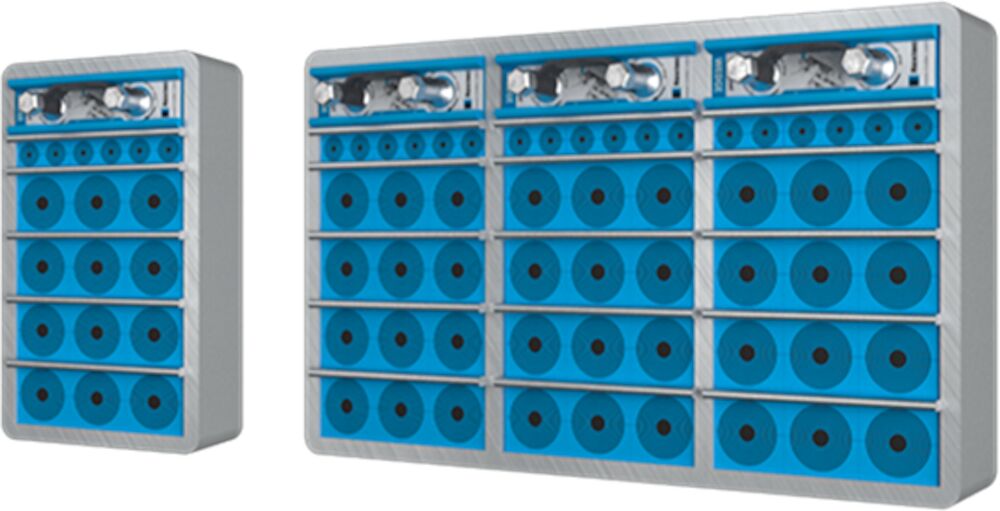
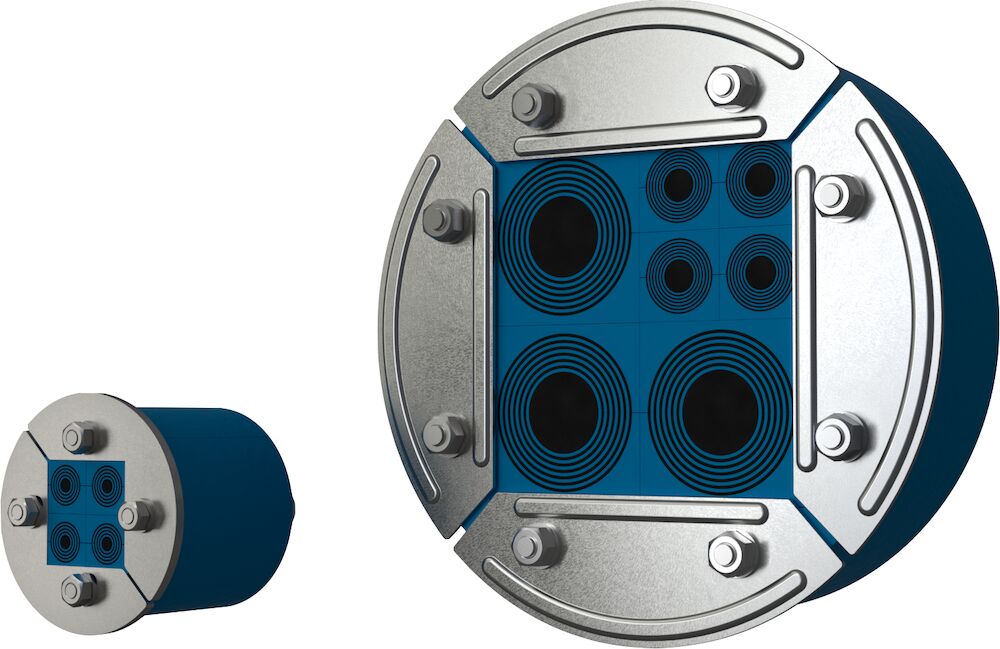
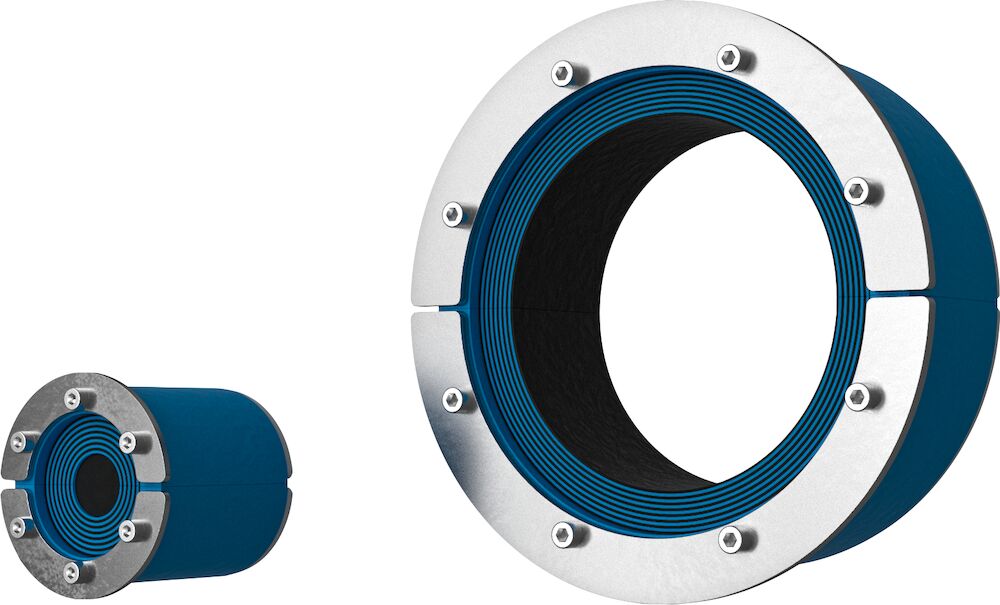
 The picture shows a typical Roxtec transit used to seal around several pipes.
Improved space efficiency
With the conventional method, pipes were welded one by one. This required spacing between the pipes and a lot of space at the penetration. Especially when designing smaller vessels, where space is limited, design engineering can be challenging and time-consuming. With Roxtec multi-cable and pipe transits, however, pipes can be sealed with high density, enabling the penetration opening to be reduced to approximately one-half to one-quarter compared with the conventional method.
Being able to design with only general piping information gives us peace of mind – even when pipe sizes and quantities change.
Why use Roxtec?
- Watertight
- Gas-tight
- Fire rated
- Space efficient
- Flexible for changes
Project facts
Project description
Design and construction of chemical tankers in Japan
Companies involved
Fukuoka Shipbuilding – design, engineering, construction
Applications
Sealing of SUS pipe penetrations for gas detectors and air-purge type liquid level gauge for ballast tanks, and sealing of copper pipe penetrations in CO2 fire suppression systems
Sealing requirements
Watertightness
Gas-tightness
Fire protection
Roxtec products
Roxtec S and R transits and Roxtec RS seals